Hydroponics can seem like magic: plants growing in water instead of dirt! But behind the scenes, it’s all about precision. Plants need just the right balance of nutrients and pH (how acidic or alkaline the water is) to absorb what they need. And if things get off balance? That’s when you start seeing yellow leaves, stunted growth, or other problems. In this guide, we’ll demystify EC, walk through pH testing, show you how to adjust nutrient solutions, and flag the classic signs of common imbalances. Let’s grow together!
Care Tips
- Test your pH and EC (electrical conductivity) at least twice a week for stable plant health.
- Keep nutrient solution pH between 5.5 and 6.5 for most hydroponic crops.
- Adjust nutrients gradually—big swings can shock your plants.
- Watch for warning signs like yellowing leaves, stunted roots, or leaf tip burn.
- Always use clean, calibrated meters for reliable pH and EC readings.
- Flush your system every 2–4 weeks to prevent salt buildup and nutrient lockout.
- Keep a log of changes and symptoms to spot patterns and prevent future issues.
Background: Why pH & Nutrients Matter in Hydroponics
Plants in soil have a buffer—organic matter and microbes help even out mistakes. But in hydroponics, Understanding pH & Nutrients in Hydroponic Systems is vital because your plants are completely dependent on you for everything they eat and drink. There’s no cushion for errors, but there’s also much more control over your plants’ environment.
What Is pH?
pH measures how acidic or alkaline your nutrient solution is. It’s a scale from 0 to 14—7 is neutral. Most hydroponic plants prefer slightly acidic water (pH 5.5 to 6.5) because it helps them absorb essential nutrients. If pH is off, even if you’re feeding the right stuff, the roots can’t take it up efficiently.
What Is EC?
EC stands for Electrical Conductivity. It’s a way to measure how much nutrient (dissolved salts) is in your water. Higher EC means more nutrients, but too much can “burn” plants, while too little will starve them. EC is measured in units like mS/cm (millisiemens per centimeter) or ppm (parts per million).
Why Are These So Important?
- pH makes nutrients available or locks them out.
- EC tells you if your plant is getting enough food or too much.
- Both work together: the right EC at the wrong pH is still a problem!
By monitoring these two, you can avoid most beginner hydroponic disasters and grow lush, healthy plants—even in the smallest space.
Want to explore more about indoor gardening setups? Visit our Indoor Gardening archive for inspiration.
Supplies: What You Need for Hydroponic Success
Before you start tweaking pH and nutrients, make sure you have the right tools. Investing in quality supplies pays off in plant health and fewer headaches.
Essential Tools
- pH Meter or Test Kit: Digital meters are best for accuracy, but paper strips can work for beginners.
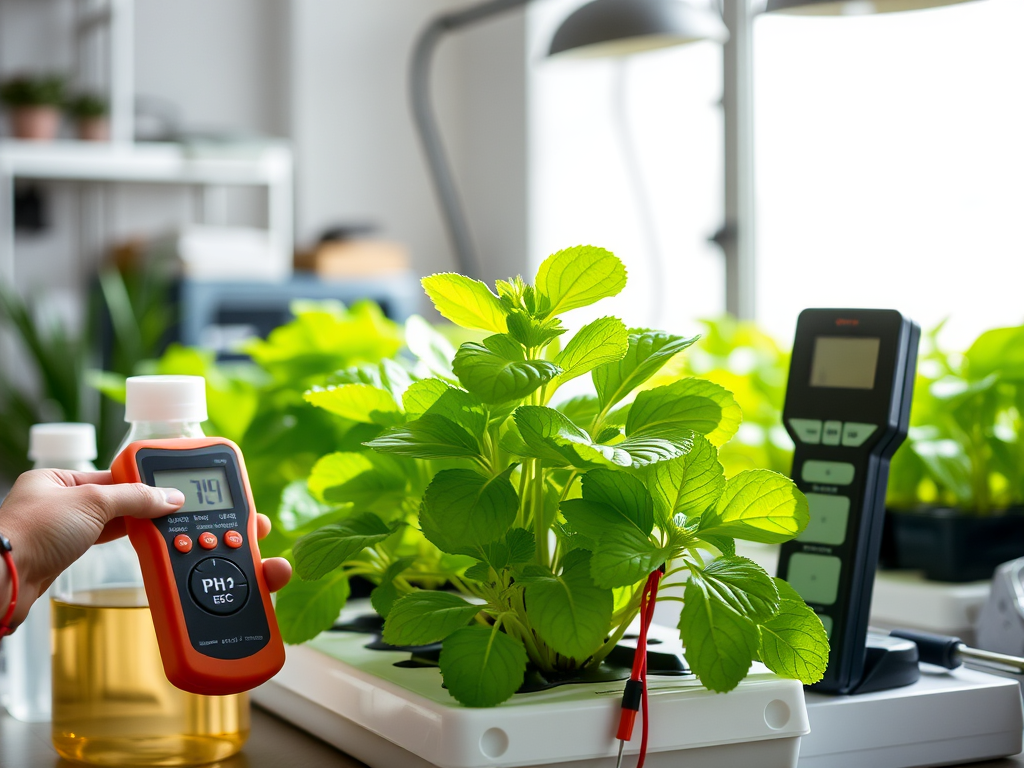
- EC Meter: Measures the strength of your nutrient solution. Many hydroponic meters measure both pH and EC.
- pH Up & pH Down Solutions: Chemical solutions that let you tweak pH safely. Never use household products like vinegar or baking soda—they’re not stable for hydroponics.
- Hydroponic Nutrient Solution: Buy a complete, water-soluble fertilizer formulated for hydroponics. It should have all macro and micronutrients.
- Measuring Cups & Spoons: For precise mixing and adjustments.
- Clean Water: Tap water can work, but if it’s very hard (high in minerals), consider using filtered or reverse osmosis water.
- Logbook or App: Tracking your readings and changes makes troubleshooting easier.
Optional But Helpful
- Spare calibration solutions for your meters (pH 4.0, 7.0, and EC standard).
- Protective gloves and eyewear when handling concentrated chemicals.
- Labels and waterproof markers for containers.
For more handy setup checklists and gear reviews, check out our Herb Gardening & Kitchen Herbs section.
Step-by-Step: Testing, Adjusting, and Balancing
It might sound technical, but keeping your hydroponic system balanced is just a matter of regular checks and gentle tweaks. Let’s walk through the basics.
1. Testing Your pH and EC
- Turn off pumps and let the water settle for 15 minutes before testing.
- Dip your meter or test strip into the nutrient solution. For pH, aim for 5.5–6.5. For EC, check your plant’s recommended range (usually 1.2–2.4 mS/cm for leafy greens, a bit higher for fruiting plants).
- Rinse meters with distilled water after each use for accuracy.
2. Adjusting pH
- If pH is too low (acidic): Add a few drops of pH Up, mix well, and retest after 15 minutes.
- If pH is too high (alkaline): Add pH Down, mix, and recheck.
- Make changes slowly—small adjustments go a long way!
3. Adjusting Nutrient Strength (EC)
- If EC is too low: Add more nutrient solution according to label directions, stir, and retest.
- If EC is too high: Dilute with clean water, then double-check both EC and pH.
- Keep a log of exactly how much you add or dilute for next time.
4. Mixing New Nutrient Solution
- Always add nutrients to water, not water to concentrated nutrients (prevents unwanted chemical reactions).
- Mix thoroughly and let sit for a few minutes before testing pH and EC.
- Adjust as needed before returning solution to your system reservoir.
5. When to Flush & Replace Solution
- If your EC or pH drifts wildly, or your plants look stressed, it’s time to drain and refill with fresh solution.
- Flush your system every 2–4 weeks as routine maintenance.
Troubleshooting: Recognizing and Fixing Common Imbalances
Even with the best intentions, things can go sideways in a hydroponic system. Here’s how to spot and fix the most common issues quickly.
Classic Signs of pH & Nutrient Issues
- Yellowing Leaves (Chlorosis): Often caused by pH being out of range, blocking iron or other nutrients.
- Leaf Tip Burn: Usually from too high EC—nutrient “burn.” Dilute your solution.
- Stunted Growth: Either too little nutrient (low EC) or micronutrient deficiency from pH lockout.
- Purple or Red Stems: Possible phosphorus deficiency; check pH and EC, and make sure nutrients are complete.
- Browning Roots: Can signal root rot (lack of oxygen) or high EC burning roots.
Quick-Fix Checklist
- Test both pH and EC immediately.
- Adjust gradually; remember, sudden changes can stress plants further.
- Flush the system with clean water if you suspect salt buildup.
- Review your logbook for recent changes in solution or environment.
- Check temperature—too hot or cold can impact nutrient uptake.
- Recalibrate your meters if readings seem off.
Preventing Future Problems
Regular monitoring and record keeping are your best defense. Consider making a routine calendar of checks, flushes, and solution changes. Remember, prevention is easier (and cheaper) than cure!
For more troubleshooting tips or help with specific plant issues, browse our Plant Care Tips & Troubleshooting archive.
Hydroponic Plant-Care Comparison Table
| Plant Type | Optimal pH | EC Range (mS/cm) | Light Needs (hrs/day) | Water Temp (°C) | Notes |
|---|---|---|---|---|---|
| Lettuce | 5.5–6.2 | 1.2–1.8 | 12–16 | 18–22 | Fast-growing; bolts if too hot |
| Basil | 5.8–6.2 | 1.0–1.6 | 14–16 | 20–25 | Prune often for bushier plant |
| Tomato | 5.8–6.3 | 2.0–3.5 | 16–18 | 18–24 | Higher calcium needs; watch EC |
| Spinach | 6.0–7.0 | 1.8–2.3 | 12–14 | 16–20 | Prefers cooler temps |
| Strawberry | 5.5–6.2 | 1.6–2.2 | 12–16 | 18–22 | Pollination may be needed |
For more detailed plant profiles and care guides, browse our Indoor Gardening category.
FAQ
- What is the ideal pH range for most hydroponic plants?
- Most hydroponic crops thrive with a pH between 5.5 and 6.5. Some, like spinach, can tolerate slightly higher pH. Always check your specific plant’s needs.
- How often should I test pH and EC in my hydroponic system?
- Test at least twice a week. If you’re just starting out or notice plant problems, daily checks can help you catch problems early.
- Can I use tap water for my hydroponic system?
- Often yes, but it depends on your tap water’s hardness and quality. If your water is very hard or contains chlorine/chloramines, consider filtering it for best results.
- What do I do if my pH keeps drifting?
- Persistent pH drift may mean you need to flush your system and start fresh. Check your water source, nutrient brand, and make sure you’re mixing solutions in the right order.
- Why are my plant tips turning brown?
- Browning or “burnt” leaf tips are a sign of high EC (too much fertilizer). Dilute your nutrient solution and monitor EC closely.
- Is it okay to use soil fertilizers in hydroponics?
- No. Soil fertilizers don’t dissolve fully or include all nutrients hydroponic plants need. Always use a fertilizer labeled for hydroponic use.
- What is the difference between EC and TDS?
- EC (electrical conductivity) is the direct measure of dissolved salts; TDS (total dissolved solids) is an estimate, usually in ppm. EC is more accurate for hydroponics, but both help gauge nutrient strength.